

We frequently talk about the harmful impact of too much screen time and social media on children, including increased anxiety and depression, disrupted sleep patterns, desensitization to violence, disregulation, and more. The response over the last two decades from pediatricians, educators and other professionals has been to tell parents to limit screen time. But for parents overwhelmed by constantly emerging new technologies and trends, it is not as simple as turning off the TV or taking the tablet or smartphone away from their child after a certain amount of time.
With the goal of providing strategies that promote healthy media habits that are actionable and realistic for busy parents in today’s world, the American Academy of Pediatrics (AAP) Center of Excellence on Social Media and Youth Mental Health recently published the 5 Cs Media Use Guidance.
The 5 Cs approach was developed for clinicians and educators who want to support parents with better advice for handling today’s complicated media landscape than the traditional 2-hour screen time rule. The approach aims to empower parents rather than make them feel guilty about their family’s screen habits.
According to the article’s authors, “Our approach, informed by the research evidence, is more nuanced than simple screen time rules: parents should be aware of the real risks of overuse of media, but also of the times when they don’t need to worry – including the benefits of high-quality programming and the joys of watching good storytelling together.”
The 5 Cs is more about knowing your child and their specific screen habits, and finding appropriate usage solutions together.
What are the 5 Cs?
1. Child – Because children are all different, they don’t each experience the same risks and benefits from media. Therefore, parents should be encouraged to consider their child and think about how screen time and social media impact them specifically. For example, does time on social media make them feel anxious and less confident? Or do they use it as a tool for socializing with their friends in a positive way?
2. Content – Consider what your child tends to play or watch. Through discussion, help them recognize content that might be too violent or inappropriate and then work together to find content that is more positive or educational. Common Sense Media is one good resource for kid-friendly and age-appropriate options.
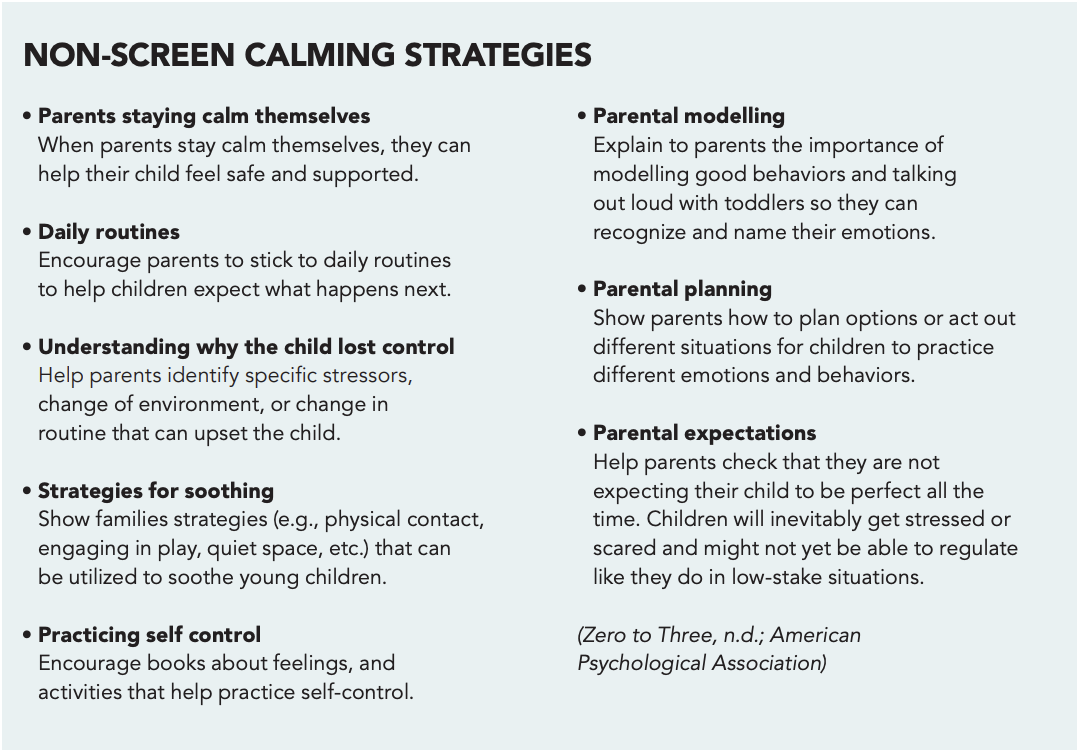
3. Calm – Many children rely on their devices for relaxation or to calm down at night before bedtime. Work with your child to explore other strategies that will help calm your child’s brain and body.
4. Crowding Out
Help your children recognize that screen time may be getting in the way of other things they like to do. Talk to them about which activities they would like to spend more time on – playing outdoors, going to the movies, spending time with friends or pets, or getting more sleep. Then, work together to come up with a schedule for media usage that ensures there is enough time for these other activities. Having a plan in place about when and where media is used during the day is helpful. Learn more about developing a media plan here.
5. Communication – Talk about media early and often so your children are aware of the risks and you can gauge if their use of media is causing them to struggle with their mental health. Listen, ask questions and be open-minded.