
Almost immediately after conservative activist Charlie Kirk’s recent assassination, the graphic footage of his shooting was posted all over social media. Those of us who aren’t accustomed to spending hours scrolling the internet were shocked by the horrific violence that came across our screens.
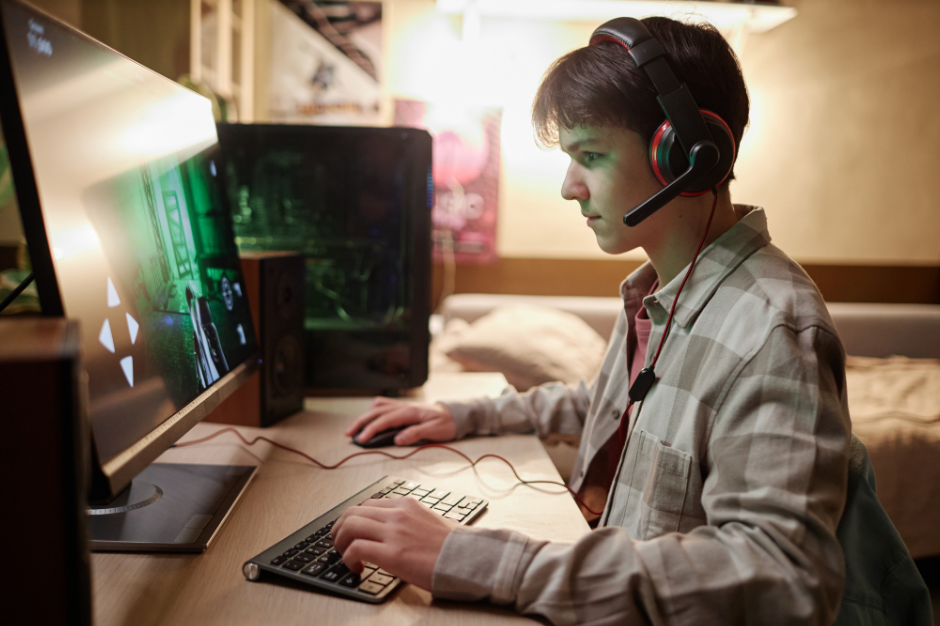
However, for the many young people who have access to smartphones and are immersed in the world of social media and video-gaming daily, exposure to graphic violence is an almost commonplace part of their lives.
Consider these troubling realities:
- Teens are spending about five hours a day on social media. A recent study out of the United Kingdom found that 70% of teens see real-life violence on social media and a quarter of violent content is pushed by social media platforms.
- The average American child spends around three hours each day watching television. More than 60% percent of TV programs, including children’s programming, contain violence. Seventy-five percent of violent scenes show no punishment for, or condemnation of, violence.
- According to the Pew Research Center, about 85% of U.S. teens say they play video games. More than half of them report that at least some of the games they play include violence.
A large body of research, over decades, has concluded that this daily exposure to graphic content has a harmful impact on children’s brains and behaviors, specifically, the science has identified four main effects:
Aggression
Psychologist Albert Bandura conducted the first research linking media violence with childhood aggression in 1961. He suggested children learn through modeling — meaning they imitate the actions of others, especially adults. His experiments involved children watching a movie of adults and interacting with a large plastic doll that bounced back when hit or pushed. The children who watched the adults being aggressive with the toy figure were more likely to be aggressive with other children during playtime. Subsequent studies have found that preschoolers who watch violent cartoons are more likely to hit playmates and to disobey teachers than children exposed to nonviolent shows.
Research also found associations between childhood exposure to violent media and an array of problems in adulthood. For example, men who were “heavy viewers” of TV violence as children were twice as likely to physically abuse their spouses, compared to those who watched less violence as children. The results are similar for women (Levy and Orlans 2000).
Desensitization
Children who witness considerable media violence can become desensitized — or less shocked by violence — less sensitive to the pain and suffering of others, and less likely to show empathy for victims of violence.
Violent media — and specifically violent video games — desensitize children. Many popular games are even similar to modern military training techniques that desensitize soldiers to killing. For example, only about 20 percent of soldiers in World War II were actually able to shoot the enemy. However, during the Vietnam War, 90 percent of soldiers could shoot and kill without hesitation. The change was attributed to new training procedures that included having soldiers practice shooting human-shaped figures rather than bull’s-eyes (Grossman and Siddle, 1999). Lifelike video game violence desensitizes children in the same way, and leads to automaticity — or the learning of a behavior to the point that it becomes reflexive.
Fear
Fear is another result of media violence. Children and adults can become anxious and even traumatized by the violence they see on TV and in movies. Remember the film “Jaws?” Were you afraid to swim in the ocean afterwards?
Messages
Media violence gives children the message that aggression and violence are acceptable solutions to conflicts and problems. In many homes, children identify with TV, movie and video game characters and look to them as heroes, role models and parent figures. A three-year study sponsored by the American Academy of Pediatrics and published in 1995 had alarming findings about how violence is portrayed:
- Almost half of violent scenes on TV involved attractive, hero-type characters worthy of emulation. Seventy percent of those characters showed no remorse;
- 50 percent of violent scenes showed victims without any pain, and
- 40 percent of all violence was combined with humor.
The message is that violence is painless and a desirable problem-solving tool. Again, the negative effects of media violence are multiplied for children with frightening and traumatic backgrounds. Their anger, fear and lack of self-control are easily triggered.
Why storytelling is better than media
Telling children stories has been part of our heritage since time immemorial. Storytelling is still the way primitive creatures pass on the history, traditions and meaning of their culture. Children naturally love to listen, and are captivated by every word of a good story or fairytale. The story causes the child to turn inside and create mental pictures to correspond with the spoken words. The internal imaging stimulates the child’s brain and is the foundation for the development of symbolic thought (how we picture things). Exposure to storytelling, reading materials, and conversations form the foundation for a young child’s literacy.
Television presents both a verbal and visual image at the same time. Nothing is left to the imagination. The child is deprived of the self-generated imaging required by his developing brain. Without adequate stimulation, the brain does not make new connections. To put it simply, watching television doesn’t challenge the brain; it actually pacifies the brain and puts it to sleep. The child’s television-induced stupor puts his brain on autopilot and impedes the development of imagination.
Unimaginative children are more prone to violence, partly because they have difficulty imagining creative alternatives to their problems.
Tips to help parents make entertainment choices for their children
Monitor viewing and scrolling. Limit the amount of time a child is allowed on their phone, watching television or other media, and limit the type of exposure.
Set location for TVs, computers and phones when kids are home. Screens, televisions, computers and any other mobile devices should be in areas of the house where parents can supervise, monitor and engage with their children as they engage with media. Screens and devices should not be in bedrooms.
Encourage reading. Children spend less time on screens when they read more. And good readers are also more likely to think critically when they do consume media.
Provide guidance. Parents should watch programs and videos with their children to foster communication and reinforce positive messages. Parents can also buffer negative messages and put them in appropriate contexts.
Set age limits. Do not allow children under age 2 to have screen time because it may hamper language development and social interaction.
Limit commercials. Use streaming media services, videos and public television channels to reduce exposure to marketing messages and advertising.
Parents share ideas
Writing to us through Facebook, Adrianne Sylvester shared this:
“Over the summer, we started a new routine. Screen time of any sort is conditional on the kids’ morning ‘room check’: clean their rooms, make beds, bring laundry to me on laundry day, complete a daily chore, read 30 minutes and then write a couple sentences about what they read. Now that school is back in session, the reading has gotten pushed back to the evenings, and weekends for chores.
“Then they are allowed TV, video games, Fire tablets, Chromebook. I keep all devices in my room to charge at night. Everything has parental controls, they don’t have YouTube on their tablets…only my middle schooler has access to YouTube, and I check what he’s watching regularly.
“Before dinner each night, they’re expected to do another cleanup of toys, and put away laundry if it’s their day. If they didn’t do what they were supposed to, they lose screen privileges for the next day.
“As long as I stick to enforcing this system, it works really well! My kids also have a good sense about why we don’t watch or play violent things, and know that some content is simply inappropriate for any age. If they accidentally turn on something, they’ll turn it off right away. So far so good!”
Rose Williams wrote: “I have Parental Restrictions on all devices. I stop and check in on what is being viewed. Summer and weekends…tech time was more abundant. School days..1/2 hour…if school work and homework are completed.”